

【Brain Health Ingredient Series 9】Magnesium L-Threonate (MgT): A “Brain Magnesium Supplement” That Crosses the Blood–Brain Barrier
May. 20, 2026
What is Magnesium L-Threonate?
Magnesium L-threonate (MgT) is an organic magnesium salt formed by combining magnesium with L-threonic acid, a metabolite of vitamin C, and represents a new generation of magnesium supplements [2]. Unlike conventional magnesium supplements such as magnesium oxide and magnesium citrate, which primarily act in the gastrointestinal tract and have limited ability to cross the Blood–brain barrier, MgT contains L-threonic acid, a naturally occurring metabolite involved in brain metabolism that serves as an effective carrier to facilitate the transport of magnesium into the brain. By increasing magnesium levels in the brain—an essential mineral for maintaining neuronal activity and regulating brain signaling [8]—MgT is widely recognized as a targeted magnesium supplement for cognitive health.
Basic Properties
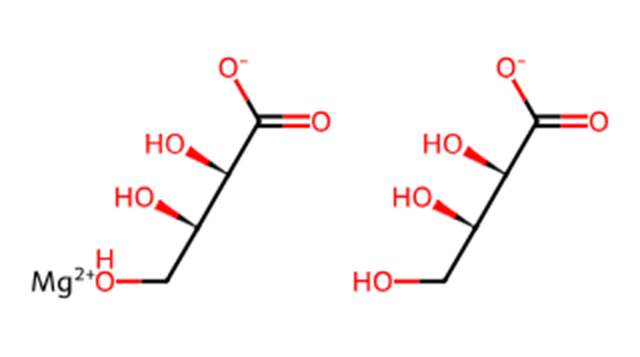
Image Source: ChemSpider
MgT is a white powder with excellent water solubility and high bioavailability. As an organic magnesium salt, it exhibits significantly greater solubility in the gastrointestinal tract than inorganic magnesium salts such as magnesium oxide, with an absorption rate exceeding 80%. In addition, it is less likely to cause gastrointestinal discomfort, such as bloating and diarrhea. MgT is suitable for a wide range of dosage forms, including capsules, tablets, and powders, making it well suited for long-term supplementation. At present, the primary manufacturing methods include chemical synthesis and biosynthesis.
Functional Benefits: Brain Protection and Cognitive Enhancement
1. Memory and Cognitive Enhancement: MgT utilizes L-threonic acid as a carrier to facilitate the active transport of magnesium across the Blood–brain barrier, thereby increasing magnesium ion concentrations in brain tissue [1]. It supports cognitive function through multiple mechanisms, including enhancing synaptic plasticity—the fundamental process underlying learning and memory [10]—and improving working and spatial memory. MgT also promotes the synthesis of brain-derived neurotrophic factor (BDNF), PSD-95, and synapsin, strengthening neuronal connectivity and synaptic signaling [7]. In addition, MgT upregulates NR2B-containing NMDA receptors, further stimulating synaptic plasticity and adult neurogenesis [4].
2. Anxiety Relief and Mood Stabilization: Magnesium acts as a GABA agonist, helping to suppress excessive stimulation of the central nervous system and maintain the balance between excitatory and inhibitory neurotransmitters in the brain [5]. It enhances the activity of GABA, the primary inhibitory neurotransmitter, while reducing excessive activation of glutamate, the major excitatory neurotransmitter. As a result, MgT may help alleviate anxiety, irritability, and emotional fluctuations while promoting greater mood stability.
3. Neuroprotection and Healthy Brain Aging: Magnesium serves as a cofactor for key antioxidant enzymes in the brain, such as glutathione peroxidase, and helps reduce oxidative stress-induced neuronal damage [9]. It also exerts anti-inflammatory effects by inhibiting neuroinflammation [3], which may contribute to a lower risk of neurodegenerative disorders such as Alzheimer's disease and Parkinson's disease.
Regulatory Status
United States: MgT obtained U.S. Food and Drug Administration GRAS (Generally Recognized as Safe) status in 2014 and is approved for use in dietary supplements and functional foods.
European Union: In October 2024, the European Commission authorized MgT as a Novel Food for placement on the EU market [6]. The maximum permitted intake is 250 mg/day of elemental magnesium, equivalent to up to 3,000 mg/day of MgT. Its use is restricted to food supplements intended for adults, excluding pregnant and lactating women.
China: In 2016, the National Health Commission of the People's Republic of China approved MgT as a new nutrient fortifier (Announcement No. 8 of 2016). In 2025, Announcement No. 4 revised its quality specifications. MgT is permitted for use in formulated milk powders (excluding infant formula and products for pregnant and lactating women) and beverages, excluding packaged drinking water and solid beverages.
Clinical Evidence: Data-Validated Benefits of Brain Magnesium Supplementation
ADHD Symptom Improvement: A clinical study involving 15 adults with Attention Deficit Hyperactivity Disorder (ADHD) demonstrated that 12 weeks of MgT supplementation significantly improved symptoms of inattention and hyperactivity [13]. The observed benefits may be associated with enhanced dopaminergic signaling in the prefrontal cortex and improved synchronization of neural networks.
Restoration of Memory and Synaptic Function: Experimental studies have shown that long-term oral administration of MgT can prevent and reverse short-term memory (STM) deficits and impairments in hippocampal long-term potentiation (LTP) in the CA3–CA1 synaptic pathway induced by spared nerve injury (SNI) [12]. In addition, preventive MgT supplementation was found to inhibit the upregulation of TNF-α in the hippocampus, a pro-inflammatory cytokine known to play a critical role in memory dysfunction. These findings suggest that oral MgT may represent a simple and effective strategy for improving memory impairment.
Enhanced Learning and Age-Related Cognitive Protection: In a landmark study published by Neuron in 2010, Inna Slutsky and colleagues reported that MgT significantly increased magnesium concentrations in the hippocampus—the brain's central memory region—in rats [11]. This elevation in brain magnesium was associated with improvements in spatial memory and learning capacity and may help delay age-related cognitive decline, including the risk of Mild cognitive impairment (MCI).
Safety
EFSA has concluded that MgT presents no genotoxicity risk at the maximum recommended intake of 3,000 mg/day.
Acute Toxicity: No significant lethal risk has been observed, even at high doses.
Subchronic and Chronic Toxicity: No organ damage has been reported at conventional dosage levels. At excessive doses, mild and reversible gastrointestinal effects may occur.
Short-Term High-Dose Use: Short-term supplementation providing 600 mg/day of elemental magnesium may increase the incidence of gastrointestinal reactions; however, no serious safety concerns have been identified, and these effects are generally reversible.
Recommended Intake
General Recommended Intake: The recommended dietary intake (RDI) of magnesium is 420 mg/day for adult men and 320 mg/day for adult women. Since 2,000 mg of MgT typically provides approximately 144 mg of elemental magnesium, the recommended daily intake of MgT is generally 1,500–2,000 mg/day.
Tolerable Upper Intake Level: The European Food Safety Authority (EFSA) has established a tolerable upper intake level of 3,000 mg/day of MgT for adults, excluding pregnant and lactating women.
General Wellness (Healthy Adults): 200–400 mg/day of elemental magnesium, taken in one or two divided doses.
Targeted Support (Mild Cognitive Impairment or Anxiety): 400–600 mg/day of elemental magnesium, which may be used in combination with nutrients such as Vitamin D to enhance overall benefits.
Precautions
• Possible Side Effects: Although uncommon, the most frequently reported side effects of MgT supplementation include drowsiness, fatigue, headache, and a sensation of increased blood flow to the head. If these symptoms occur or persist, consultation with a physician is recommended.
• Special Populations: Individuals with certain medical conditions, particularly Kidney disease, as well as pregnant or lactating women and children, should consult a healthcare professional before taking magnesium supplements.
• Product Quality Considerations: When selecting MgT products, attention should be paid to both purity and content. High-quality MgT should have a purity of ≥98% and clearly indicate the amount of MgT per serving to avoid confusion between elemental magnesium content and total MgT content.
• Drug Interactions: MgT should not be taken simultaneously with medications that may chelate magnesium, such as certain antibiotics and diuretics, as this may reduce drug absorption. It is advisable to separate administration by at least 2 hours.
• Dietary Support: MgT supplementation should not replace a magnesium-rich diet. Regular consumption of foods naturally high in magnesium—such as spinach, almonds, and whole grains—remains essential to provide comprehensive nutritional support through both diet and supplementation.
• Interaction with Calcium-Rich Foods: Excessive intake of calcium-rich foods, such as tofu and milk, at the same time as MgT supplementation may reduce magnesium absorption because calcium and magnesium can compete for absorption pathways. A dosing interval of 1–2 hours is recommended.
References
[1]Xiong Y ,Yang Y ,Ruan Y , et al. Magnesium-L-threonate Ameliorates Cognitive Deficit by Attenuating Adult Hippocampal Neurogenesis Impairment in a Mouse Model of Alzheimer's Disease.[J].Experimental neurobiology,2025,DOI:10.5607/EN24030.
[2]陈文文,陈婷凤,杨春瑛. L-苏糖酸镁相关作用研究[J].生命的化学,2025,45(04):729-733.DOI:10.13488/j.smhx.20240710.
[3]Patel V ,Akimbekov S N ,Grant B W , et al. Neuroprotective effects of magnesium: implications for neuroinflammation and cognitive decline[J].Frontiers in Endocrinology,2024,151406455-1406455.DOI:10.3389/FENDO.2024.1406455.
[4]Fu C ,Huang L ,Lian C , et al. Effects of long-term magnesium L-threonate supplementation on neuroinflammation, demyelination and blood-brain barrier integrity in mice with neuromyelitis optica spectrum disorder.[J].Brain research,2024,1846149234.DOI:10.1016/J.BRAINRES.2024.149234.
[5]Liao W ,Wei J ,Liu C , et al. Magnesium-L-threonate treats Alzheimer's disease by modulating the microbiota-gut-brain axis.[J].Neural regeneration research,2024,19(10):2281-2289.DOI:10.4103/1673-5374.391310.
[6]Turck D ,Bohn T ,Castenmiller J , et al. Safety of magnesium l-threonate as a novel food pursuant to regulation (EU) 2015/2283 and bioavailability of magnesium from this source in the context of Directive 2002/46/EC.[J].EFSA journal. European Food Safety Authority,2024,22(3):e8656-e8656.DOI:10.2903/J.EFSA.2024.8656.
[7]Chengxiang Z ,Qi H ,Shifen L , et al. A Magtein®, Magnesium L-Threonate, -Based Formula Improves Brain Cognitive Functions in Healthy Chinese Adults[J].Nutrients,2022,14(24):5235-5235.DOI:10.3390/NU14245235.
[8]骆珺婕.L-苏糖酸镁对慢性脑低灌注小鼠认知功能的作用[D].桂林医学院,2022.DOI:10.27806/d.cnki.gglyx.2022.000333.
[9]Young-Sung K ,Ju Y W ,Gun B L , et al. Neuroprotective effects of magnesium L-threonate in a hypoxic zebrafish model.[J].BMC neuroscience,2020,21(1-2):29.DOI:10.1186/s12868-020-00580-6.
[10]Qifeng S ,G J W ,Fei M , et al. Regulation of structural and functional synapse density by L-threonate through modulation of intraneuronal magnesium concentration.[J].Neuropharmacology,2016,108426-39.DOI:10.1016/j.neuropharm.2016.05.006.
[11]Xin Y ,Pei-Pei G ,Jing-Wen G , et al. By suppressing the expression of anterior pharynx-defective-1α and -1β and inhibiting the aggregation of β-amyloid protein, magnesium ions inhibit the cognitive decline of amyloid precursor protein/presenilin 1 transgenic mice.[J].FASEB journal : official publication of the Federation of American Societies for Experimental Biology,2015,29(12):5044-58.DOI:10.1096/fj.15-275578.
[12]Liu G ,Weinger G J ,Lu Z , et al. Efficacy and Safety of MMFS-01, a Synapse Density Enhancer, for Treating Cognitive Impairment in Older Adults: A Randomized, Double-Blind, Placebo-Controlled Trial[J].Journal of Alzheimer's Disease,2015,49(4):971-990.DOI:10.3233/JAD-150538.
[13]Slutsky I ,Abumaria N ,Wu L , et al. Enhancement of Learning and Memory by Elevating Brain Magnesium[J].Neuron,2009,65(2):165-177.DOI:10.1016/j.neuron.2009.12.026.
Últimos blogs
-
Sep. 21, 2026
【Food Antioxidants Series 6】 A Key Player in Lipid Preservation | Propyl Gallate (PG)
-
Sep. 21, 2026
[Exhibition Review] L&P Foods Showcases Diverse Ingredient Solutions at Fi Asia Indonesia 2026
-
Sep. 18, 2026
【Food Antioxidants Series 5】 A New Force in Natural Antioxidants | Marigold Flavonoids
-
Sep. 18, 2026
-
Sep. 15, 2026
How TBHQ Extends Shelf Life in Oils and Snacks: Mechanism and Usage Tips